Signs You May Need More Water
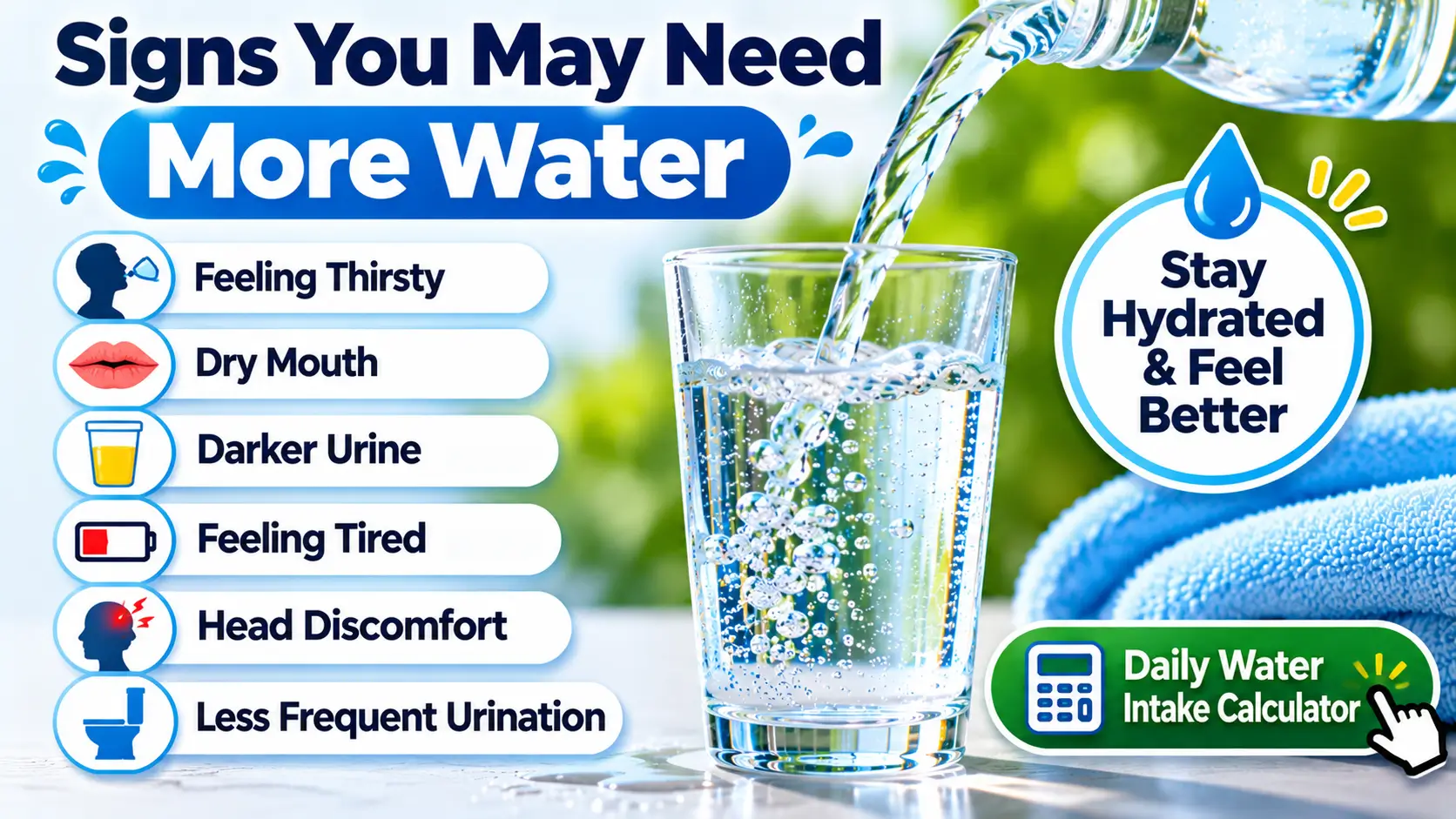
Your body needs water every day, but it can sometimes be difficult to know whether you are drinking enough. Thirst is one of the most common signals, but there are other signs that may suggest you need more fluids. A Daily Water Intake Calculator can help estimate your general daily needs, while your normal body signals can help you understand when your fluid intake may need attention.
Water is involved in many normal processes throughout the body. You lose fluid during the day through sweating, breathing, and urination, so regular fluid intake is important.
Your water needs are not exactly the same every day. Exercise, hot weather, physical work, diet, and other factors can increase the amount of fluid you need.
Understanding common signs of low fluid intake can help you build better hydration habits without relying on a fixed number of glasses.
Thirst
Thirst is one of the simplest signals that your body may need more fluids.
When you feel thirsty, drinking water is a practical way to respond to that signal. Instead of ignoring thirst for long periods, keep water available so you can drink when needed.
However, thirst should not be treated as a perfect measurement of hydration. It can vary from person to person and may be affected by age, activity, weather, and other factors.
For this reason, it is useful to combine thirst with your overall routine.
If you have been exercising, working outdoors, or spending time in hot weather, you may need to pay closer attention to fluid intake even before you become very thirsty.
Dry Mouth
A dry or sticky feeling in your mouth can sometimes occur when you need more fluids.
If your mouth feels unusually dry, drinking water may help restore normal moisture.
However, dry mouth can have many possible causes. Certain medications, mouth breathing, and other factors can also contribute to it.
Therefore, dry mouth alone does not prove that you are dehydrated.
If it happens regularly or does not improve, it may be worth discussing with a healthcare professional.
Darker Urine
Urine color can provide a general clue about your hydration status.
Darker urine can sometimes occur when you are not getting enough fluids. If you notice this after a hot day, exercise, or a period when you have not been drinking much, increasing your fluid intake may be reasonable.
However, urine color is not a perfect hydration test.
Foods, supplements, medications, and other factors can change urine color. This means you should not use color alone to determine exactly how much water you need.
Looking at urine color together with thirst, activity, weather, and your overall fluid intake can give you a better picture.
Feeling Tired
Feeling tired can occur for many different reasons, including poor sleep, stress, a busy schedule, and not getting enough fluids.
Some people may notice tiredness when their fluid intake has been low.
If you have had a busy day and realize that you have barely had anything to drink, having some water may be a sensible step.
However, you should not assume that tiredness is always caused by a lack of water.
Persistent or unexplained fatigue can have many causes and may require professional evaluation.
Head Discomfort
Some people may experience head discomfort when they have not consumed enough fluids.
This can be more noticeable after exercise, spending time in heat, or going for long periods without drinking.
Drinking water and resting may help if low fluid intake is contributing to the problem.
However, head pain can have many causes. It should not automatically be attributed to dehydration.
If symptoms are severe, persistent, unusual, or accompanied by other concerning symptoms, seek appropriate medical advice.
Reduced Urination
Your fluid intake can affect how frequently you urinate.
If you have consumed very little fluid, you may notice that you urinate less often than usual.
This can happen naturally when your body is conserving water.
However, changes in urination can also be caused by many other factors, including medications, diet, activity, and health conditions.
If you notice a significant or persistent change in urination, especially when combined with other symptoms, speak with a healthcare professional.
Increased Fluid Loss
Sometimes the most obvious reason you may need more water is that you have lost more fluid than usual.
Exercise is a common example.
When you sweat during physical activity, you lose water. The amount lost depends on the intensity and duration of exercise, the temperature, and your individual sweating rate.
Hot weather can also increase fluid loss.
If you have spent several hours outdoors in warm conditions, your normal daily drinking routine may not provide enough fluid for that particular situation.
Hot Weather
Temperature can have a major effect on your hydration needs.
When the weather is hot, your body may produce more sweat as it works to regulate temperature.
This means you may need to drink more frequently than you would on a cool day.
People who work outdoors or spend extended periods in the heat should pay particular attention to regular fluid intake.
Do not wait until you feel extremely thirsty before thinking about hydration.
Keeping a water bottle nearby can make it easier to drink regularly during hot weather.
Exercise and Physical Activity
Exercise can increase your water needs because sweating causes fluid loss.
A short, low-intensity workout may not require the same amount of fluid replacement as a long or demanding training session.
Your environment also matters. Exercising outdoors in hot weather can result in greater fluid loss than performing the same activity in a cool indoor environment.
Before exercise, make sure you have access to fluids.
During longer activities, drink regularly according to your needs. After exercising, continue your normal fluid intake to replace fluids lost through sweating.
There is no single amount that works for every workout.
Outdoor Work
People who work outside may have higher fluid needs than people who spend most of the day indoors.
Construction, agriculture, delivery work, landscaping, and other physical jobs can involve long periods of movement and exposure to heat.
Sweating can increase significantly during physically demanding outdoor work.
Workers should have reasonable access to drinking water and should take appropriate breaks when needed.
If your work regularly involves heat and heavy physical activity, your hydration routine may need to be different from the routine you use on a quiet day at home.
Your Daily Water Intake
Knowing your estimated daily water needs can make it easier to identify when your intake is lower than usual.
A Daily Water Intake Calculator can provide a personalized estimate using information such as age, gender, weight, and height.
The result is not a medical prescription. It is a general estimate that can help you create a daily drinking routine.
Once you know your approximate requirement, you can spread your fluid intake throughout the day.
This is usually more practical than trying to drink a large amount of water at one time.
Remember that your total fluid intake can also include water found in foods and other beverages.
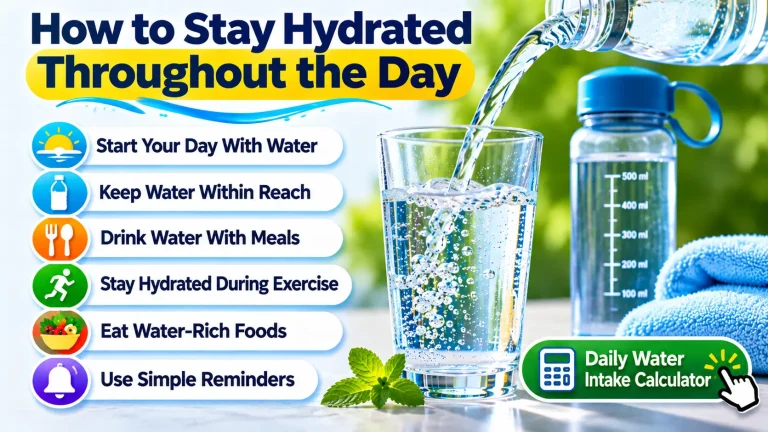
How to Stay Hydrated Throughout the Day
The easiest way to maintain hydration is to make drinking water a regular habit.
Keep a bottle near your desk, workspace, or study area. Having water within reach can remind you to drink throughout the day.
You can also drink water with meals or during regular breaks.
If you exercise, keep fluids available before and after your workout.
During hot weather, make an extra effort to drink regularly, particularly if you are spending time outdoors.
Some people find it easier to drink enough water when they use a reusable bottle with a known capacity. This can make it easier to understand how much they have consumed during the day.
Do You Always Need More Water?
Not every sign means that you need to drink a large amount of water.
For example, being tired does not automatically mean that you are dehydrated. Similarly, darker urine can have causes other than low fluid intake.
The goal should be balanced hydration rather than constantly drinking more.
Drinking excessive amounts of water can also be harmful, particularly when large quantities are consumed over a short period.
Your hydration routine should therefore focus on reasonable and regular fluid intake.
If you have a medical condition or have been given specific instructions about fluids, follow those instructions instead of using general online advice.
When to Pay Extra Attention to Hydration
Certain situations require more attention to fluid replacement.
These include long periods of exercise, heavy sweating, hot weather, outdoor physical work, and other situations where you may lose more water than usual.
Travel can also disrupt normal drinking habits.
When your routine changes, it can be easy to forget to drink water for several hours.
Keeping water with you can help prevent this.
If you are unsure about your fluid needs because of a health condition, medication, pregnancy, breastfeeding, or another personal situation, professional guidance is more appropriate than relying only on a general calculator.
Daily Water Intake Calculator
A Daily Water Intake Calculator can help you estimate how much water you may need during a normal day.
Instead of using the same target for everyone, the calculator can consider basic personal details.
Depending on the tool, you may enter your age, gender, weight, and height.
The calculator then produces an estimated amount that you can use as a starting point.
Your result can change if your circumstances change.
For example, you may need more fluids on a day when you exercise outdoors in hot weather than you would on a day when you remain indoors with little physical activity.
The calculator is therefore best used as a guide rather than a strict daily rule.
Final Thoughts
Your body can provide useful signals when your fluid intake may be low, but no single sign can tell you exactly how much water you need.
Thirst, dry mouth, darker urine, reduced urination, tiredness, and increased fluid loss can all be reasons to pay closer attention to your hydration habits.
At the same time, these signs can have other causes, so they should not automatically be interpreted as dehydration.
A Daily Water Intake Calculator can give you a useful estimate based on your personal information. You can then use that estimate to build a regular drinking routine.
The key is consistency. Drink regularly, pay attention to situations that increase fluid loss, and adjust your intake when your activity or environment changes.
If you have specific medical instructions about fluid intake, always follow those instructions instead of relying on a general online calculator.