How Much Water Should You Drink a Day? Daily Water Intake Guide
How much water should you drink a day? The answer is different for every person because your water needs depend on your age, body size, activity level, diet, and daily environment. A Daily Water Intake Calculator can help you get a useful estimate based on your personal details.
Drinking enough water is an important part of staying hydrated and supporting normal body functions. However, there is no single amount that every person must drink each day.
Some people may need more fluids because they exercise regularly, spend time outdoors, or live in a hot environment. Others may need less because their daily activity is lower. Understanding these differences can help you create a practical hydration routine.
How Much Water Should You Drink a Day?
There is no universal rule that says every person must drink exactly the same number of glasses of water every day. Your body loses water throughout the day through normal activities such as breathing, sweating, and using the bathroom.
You replace this fluid through drinks and food. Water is the main source, but other beverages and water-rich foods also contribute to your overall fluid intake.
A simple approach is to drink regularly throughout the day instead of waiting until you feel extremely thirsty. Thirst can be a useful signal, although your needs can change depending on your activity and surroundings.
Your body may need more fluids on a hot day or after physical activity. If you are sitting indoors most of the day, your needs may be different.
The goal is not to force yourself to drink as much water as possible. Drinking an appropriate amount regularly is a more practical approach to daily hydration.
Recommended Daily Water Intake
Recommended water intake can vary because people have different body sizes, lifestyles, diets, and environments. This is why a fixed number of glasses should not be treated as a requirement for everyone.
General guidance often considers total water intake from both beverages and food. A significant amount of daily fluid can come from foods such as fruits, vegetables, soups, and other foods that naturally contain water.
For everyday use, you can focus on drinking water regularly during the day and increasing your fluid intake when you lose more water through sweating or physical activity.
Here is a simple way to think about your hydration needs:
| Situation | Water Needs May Increase |
|---|---|
| Normal daily routine | Regular fluid intake |
| Exercise or sports | More fluids may be needed |
| Hot weather | Higher fluid needs |
| Heavy sweating | Additional fluids may be needed |
| Outdoor work | More frequent drinking may help |
| Water-rich diet | Some fluids come from food |
These are general situations rather than strict rules. Your individual needs can be different.
If you have a medical condition or have been told by a healthcare professional to limit fluids, follow that advice instead of using a general hydration estimate.
How Much Water Do You Need by Weight?
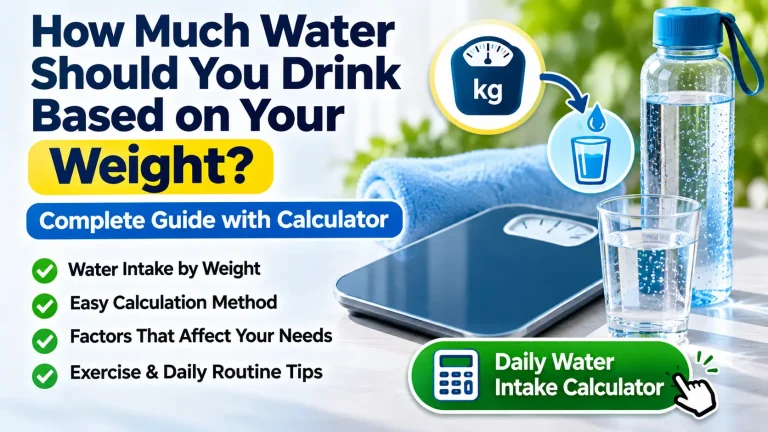
Body weight is one factor that can be used when estimating daily water needs. Larger bodies may require more fluid than smaller bodies, but weight alone does not determine exactly how much water you should drink.
This is why simply multiplying your weight by a fixed number should not be treated as a perfect answer. Activity, weather, diet, age, and other factors can change your needs.
A Daily Water Intake Calculator can make this process easier by combining your weight with other basic information.
For example, two people with the same weight may have different water requirements. One person might spend several hours exercising outdoors, while another may have a mostly sedentary indoor routine.
The person who sweats more will generally need to replace more fluid.
Your weight can therefore provide a useful starting point, but it should be viewed as an estimate rather than an exact daily requirement.
If you are trying to improve your hydration habits, use your estimated amount as a guide and pay attention to your body’s signals throughout the day.
Factors That Affect Your Water Needs
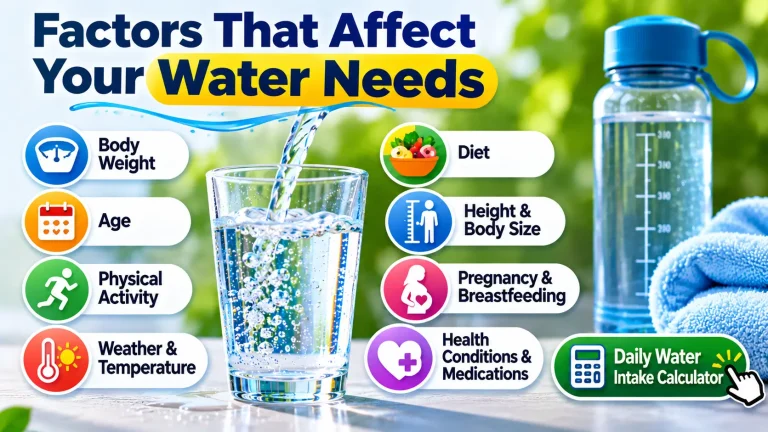
Several factors can change how much fluid you need each day. Understanding these factors is more useful than following one fixed drinking rule.
Activity Level
Physical activity can increase fluid loss through sweating. If you exercise, play sports, walk for long periods, or perform physically demanding work, you may need additional fluids.
The amount you need depends on how long and how intensely you are active.
Weather and Temperature
Hot weather can increase sweating and fluid loss. Spending time outside on a warm day may therefore increase your water needs compared with spending the same amount of time indoors.
Humidity and other environmental conditions can also affect how your body loses fluids.
Age
Water needs can change at different stages of life. Children, adults, and older adults may have different hydration needs.
Older adults may also be less aware of thirst, making regular fluid intake an important part of their daily routine.
Diet
Food contributes to your total water intake. Fruits and vegetables can contain substantial amounts of water, while other foods may contain less.
Your overall diet can therefore influence how much fluid you get from food in addition to what you drink.
Pregnancy and Breastfeeding
Fluid needs can change during pregnancy and breastfeeding. People in these situations should consider guidance from their healthcare professional when deciding how much fluid they need.
Health and Medications
Certain health conditions and medications can affect fluid balance or how much a person should drink.
If you have been given specific instructions about fluid intake, follow those instructions rather than relying on a general calculator.
Signs You May Need More Water
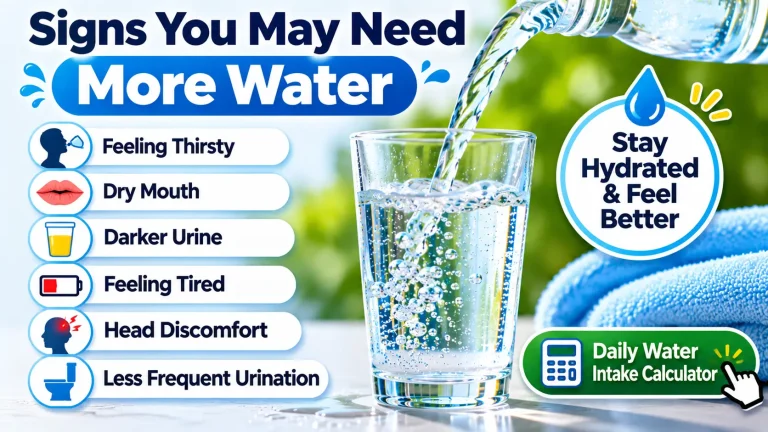
Your body can provide several signals that you may need to drink more fluids. One common signal is thirst.
Other signs can include a dry mouth, tiredness, or darker urine than usual. However, these signs are not perfect measurements of hydration on their own.
If you have been active or sweating heavily, it is particularly important to replace the fluids you have lost.
Instead of waiting until you feel very thirsty, try making water part of your normal routine. Drinking small amounts regularly can be easier than trying to drink a large amount at once.
Urine color can also provide a general clue about hydration. A darker color can sometimes indicate that you need more fluids, although many factors can affect urine color.
Certain foods, supplements, and medications can change urine color, so it should not be treated as a precise hydration test.
If you experience unusual or persistent symptoms, especially when they are severe, it is better to speak with a healthcare professional rather than assuming they are caused by dehydration.
How to Stay Hydrated Throughout the Day
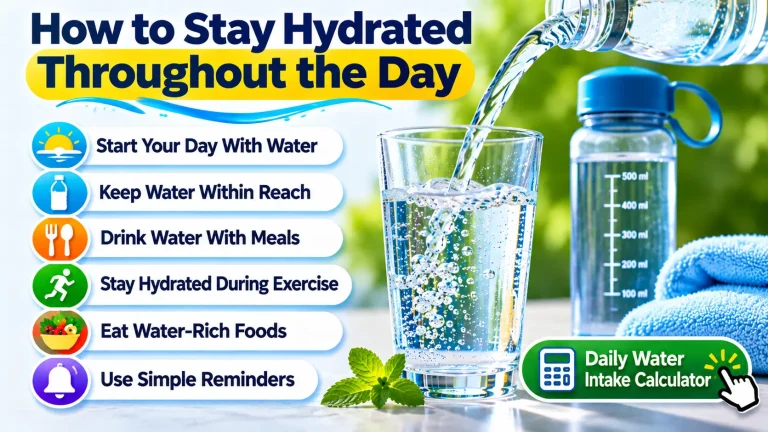
The easiest way to stay hydrated is to make drinking water part of your daily routine.
Start your day with some water and keep a bottle nearby when you are working, studying, or traveling. Having water within reach makes it easier to drink regularly.
You can also connect drinking water with regular activities. For example, you might drink water with meals or after physical activity.
If you exercise, keep water available before, during, and after your workout. The amount you need will depend on the intensity and duration of the activity and how much you sweat.
Eating water-rich foods can also contribute to your overall fluid intake. Fruits and vegetables are simple options that can provide both nutrients and water.
If plain water feels boring, some people find it easier to drink when they add natural flavors such as lemon, cucumber, or mint. The important point is to choose a routine that helps you drink regularly.
Avoid turning hydration into a competition. More water is not automatically better, and forcing excessive amounts of water can be unsafe.
A consistent routine is usually more practical than trying to drink a very large amount in a short period.
Daily Water Intake Calculator
A Daily Water Intake Calculator provides a convenient way to estimate your personal daily water needs.
Instead of relying on a general rule, the calculator can consider information such as your gender, age, weight, and height to produce an estimate.
Your result should be treated as a starting point rather than a strict medical requirement. Your actual needs can change from day to day depending on exercise, weather, diet, and other factors.
For example, you may need more fluids after a long workout or during a particularly hot day. On a cooler day with less physical activity, your needs may be different.
The calculator is especially useful when you want a simple starting point for building a daily hydration routine.
How to Use the Calculator
Using a Daily Water Intake Calculator is usually simple.
Enter the requested information, such as your age, gender, weight, and height. The calculator then processes the information and provides an estimated daily water intake.
Once you have your estimate, you can use it to plan your daily drinking routine.
You do not need to drink the entire amount at one time. Spreading your intake throughout the day is generally more practical.
Remember that water from foods and other beverages can also contribute to your overall fluid intake.
Final Thoughts
How much water should you drink a day? There is no single answer that works perfectly for every person.
Your body size, activity level, age, diet, weather, and daily routine can all influence your fluid needs.
A Daily Water Intake Calculator can give you a useful starting estimate, while your daily routine and body’s signals can help you adjust your intake.
The main goal is simple: drink regularly, replace fluids when you lose more through activity or heat, and avoid treating hydration as a one-size-fits-all rule.